In foodservice, handwashing isn’t just “wash your hands when you can.” It’s a specific routine that keeps germs off food, clean dishes, and the next surface you touch (we’ll cover the CDC and WHO recommendations). When the rush hits, it’s easy to cut corners or do the steps out of order, but that’s exactly when cross-contamination happens.
The good news is that the correct order is simple and doesn’t take long. In this guide, you’ll get the exact step-by-step sequence for foodservice, what areas people miss most often, and when staff should wash during a shift, plus what to do when a sink isn’t close by and how to set up a proper handwashing station in temporary or low-access areas. Now let’s get to it.
What Is the Correct Order of Steps for Handwashing?
The Centers for Disease Control and Prevention (CDC) and the World Health Organization recommend a specific order for handwashing so it’s effective and consistent. Each step builds on the last, helping remove dirt, oils, and germs from your skin as completely as possible.
Start by wetting your hands under clean running water. Warm water can feel more comfortable for many people, and cold water works too, as long as you’re using soap and scrubbing long enough. Add soap, then lather and scrub every surface: your palms, the backs of your hands, between your fingers, your thumbs, your fingertips, and under your nails. Keep scrubbing for at least 20 seconds so there’s enough friction to lift germs off your skin. Next, rinse thoroughly under running water and let it carry away what you loosened. Finally, dry your hands completely with a clean towel or an air dryer. If the faucet isn’t hands-free, use a paper towel to turn it off so you don’t re-contaminate your hands.
The main goal is to use clean running water, plenty of soap, and proper technique from start to finish. When you stick to the full sequence, you’re giving yourself the best shot at removing germs before you touch food, utensils, surfaces, or anything else in the kitchen. We’ll go into more detail on this a little further below!
Why the Correct Order of Handwashing Steps Matters
Your hands pick up germs all day long. In foodservice, that matters even more because you’re moving between surfaces, tools, and ingredients nonstop. Following the correct handwashing order helps break that chain before germs can spread to food, equipment, or other people.
Each step in the sequence has a job. Wetting first helps the soap spread and lather more easily. Soap helps lift dirt and oils that germs cling to. Scrubbing creates the friction that actually loosens germs from your skin, especially around fingertips, thumbs, and between fingers. Rinsing washes it all away, and drying finishes the job because wet hands can transfer germs more easily than dry hands.
This isn’t just a nice idea. Research and public health guidance show that better hand hygiene can reduce respiratory illnesses like colds by about 21% and reduce diarrheal illness by about 31%.
Think about a busy kitchen moment. Someone handles raw chicken, then jumps to assembling a salad. If they rush the handwashing or skip parts of the sequence, bacteria can stay on their hands and end up in ready-to-eat food. That’s how a single shortcut can turn into a real problem for customers.
That’s also why clearly posted steps near sinks help so much in fast-paced places like restaurants, schools, and clinics. When the instructions are right there, people don’t have to guess, and it’s easier to do it the right way every time.
Step by Step: The Correct Way to Wash Your Hands
This is the part that helps handwashing become repeatable in a real kitchen, even when it’s busy. When you know exactly what you’re doing and why it matters, you’re a lot less likely to rush the steps that actually remove germs.
Step 1: Wet your hands
Turn on clean running water and wet your hands thoroughly. Warm water is usually the most comfortable, which makes it easier to wash long enough and do it right. If you can, take off rings and watches since jewelry can trap moisture and germs. Try not to touch the sink basin more than you have to.
Step 2: Apply soap
Use enough soap to cover all surfaces of your hands. Regular soap is usually all you need for foodservice handwashing. The goal is full coverage and a good lather.
Step 3: Lather and scrub every surface
Rub your hands together until you get a good lather. If your hands start to feel too dry to lather well, you can add a small splash of water to build more suds, but you don’t want to rinse yet.
This is where handwashing actually works… or doesn’t.
Pay extra attention to the areas people miss most often:
- Backs of your hands
- Between your fingers
- Thumbs
- Fingertips and under nails
- Wrists
Friction is what lifts germs off your skin, so don’t be too gentle here. If you have long nails or artificial nails, take extra care since germs can hide around and under them.
Step 4: Keep scrubbing for at least 20 seconds
This is the step that gets rushed the most. You can count slowly to 20, use a nearby clock, or set a quick timer. And if you want a silly but easy trick, you can hum Happy Birthday twice.
Step 5: Rinse thoroughly
Rinse under clean running water until all the soap is gone. If you can, let the water flow from your wrists down toward your fingertips so everything washes away.
Step 6: Dry completely
Dry hands fully using a single-use paper towel or a hand dryer. Drying matters because germs spread more easily from wet hands than from dry hands. In food service, skip using reusable cloth towels altogether. Use single-use towels, a continuous towel system that provides a clean section, or an air dryer.
Once your hands are dry, use a paper towel to turn off the faucet if it isn’t hands-free. And if you’re in a restroom, use a paper towel to open the door too, so you don’t pick germs right back up on your way out.
How Long Should You Wash Your Hands?
In most settings, the standard is at least 20 seconds of scrubbing with soap. That’s the part that does the real work, because the soap and the friction help lift dirt, oils, and germs off your skin.
One thing people don’t always realize is that the 20 seconds is just the scrubbing time. It doesn’t include turning on the faucet, wetting your hands, rinsing, or drying. When you do the whole process the right way, it usually takes closer to 40 to 60 seconds total, especially if you’re being thorough.
If you want an easy way to make sure you’re hitting the full scrub time, try one of these:
- Count slowly to 20
- Glance at a clock and scrub until the second hand moves 20 seconds
- Set a quick timer nearby
- And if you want a silly trick, hum Happy Birthday twice
In foodservice, the big goal is consistency. If you’re rushing the scrub step, it’s easy to miss fingertips, thumbs, and the spaces between fingers, which are exactly where germs like to hang out.
Handwashing Technique for Foodservice and Commercial Kitchens
In a commercial kitchen, handwashing isn’t just a personal hygiene thing. It’s one of the main barriers between everyday germs and someone’s meal. The steps stay the same, but the difference is how often you wash and how consistent you are about doing the full process every time, even when it’s busy.
Here are the moments that matter most, plus why they count:
- Before you start work: You’re bringing in germs from your commute, your phone, your car, and whatever you touched before clocking in.
- Before putting on gloves: Gloves don’t make dirty hands clean. If your hands are contaminated, you’re trapping that inside the glove.
- Any time you change gloves: New gloves should always go on clean hands.
- After handling raw meat, poultry, eggs, or seafood: This is one of the biggest cross-contamination risks in the kitchen.
- After touching your face, hair, phone, apron, or clothing: These are high-contact items, and people touch them without realizing it.
- After breaks, eating, drinking, or smoking: You’re handling personal items and touching your mouth and face more than usual.
- After touching garbage, dirty dishes, or cleaning tools: Even if it “doesn’t look that bad,” those surfaces are loaded with germs.
- After using cleaning chemicals: You don’t want chemical residue ending up on food, utensils, or gloves.
- After using the restroom: This one’s obvious, but it’s also the one that can undo everything if it’s rushed.
Handwashing Stations and Signage That Keep Things Consistent
Most state and local health codes expect a designated handwashing sink that’s set up specifically for handwashing. That usually means it’s stocked with soap, single-use towels, or an air dryer, and a reminder sign showing the steps. It also needs to be separate from food prep sinks and dishwashing areas, because a sink used for rinsing food, dumping drinks, or washing tools stops being a reliable handwashing station.
That is why signage is so useful in foodservice. A simple diagram above the sink gives everyone the same reference point and an easy way to double-check the order and technique. When people can glance up and confirm the steps, it helps promote consistency across the team without a manager needing to remind people all day.
And if you’re working a food truck, catering job, farmers market, or outdoor event where plumbing is not available, you can still support proper handwashing with a portable station that is stocked and easy to access. We’ll cover what that setup should include a little further below.
Quick Recap: Handwashing Standards That Keep Kitchens Safe
At the end of the day, foodservice handwashing comes down to two things: conducting the steps in the right order, and at the right moments.
The order stays the same every time:
- Wet
- Soap
- Scrub every surface for at least 20 seconds
- Rinse
- Dry completely
That scrub step is where the real work happens, so you can’t rush it, especially on fingertips, thumbs, between fingers, and under nails.
Timing matters just as much because the biggest risks happen when you’re moving between raw foods, ready-to-eat foods, equipment, and high-touch surfaces. When staff wash their hands consistently – before gloves, after raw handling, after breaks, after trash or dirty dishes, and after the restroom – it breaks the chain that causes cross-contamination. That’s why the best kitchens don’t treat handwashing as optional or random. They build it into the workflow with a station that’s stocked, easy to reach, and supported by simple signage that keeps everyone consistent.
Supporting Proper Handwashing When Plumbing Isn’t Available
Food trucks, catering setups, and outdoor events still need handwashing that works like a real sink. If the station is inconvenient, poorly stocked, or tucked out of the way, people are less likely to use it consistently. The goal is simple. Make it easy for staff to wash hands correctly, at the right times, without having to walk away from the work area.
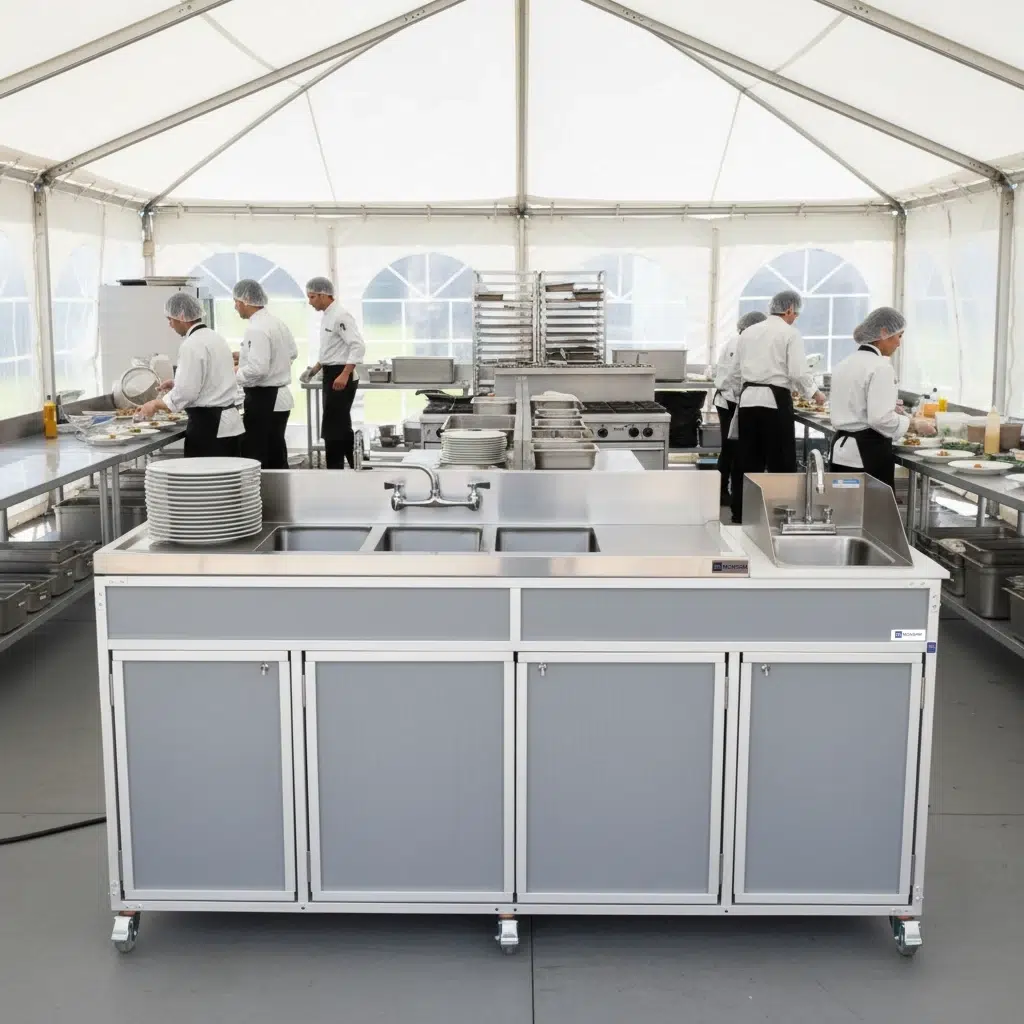
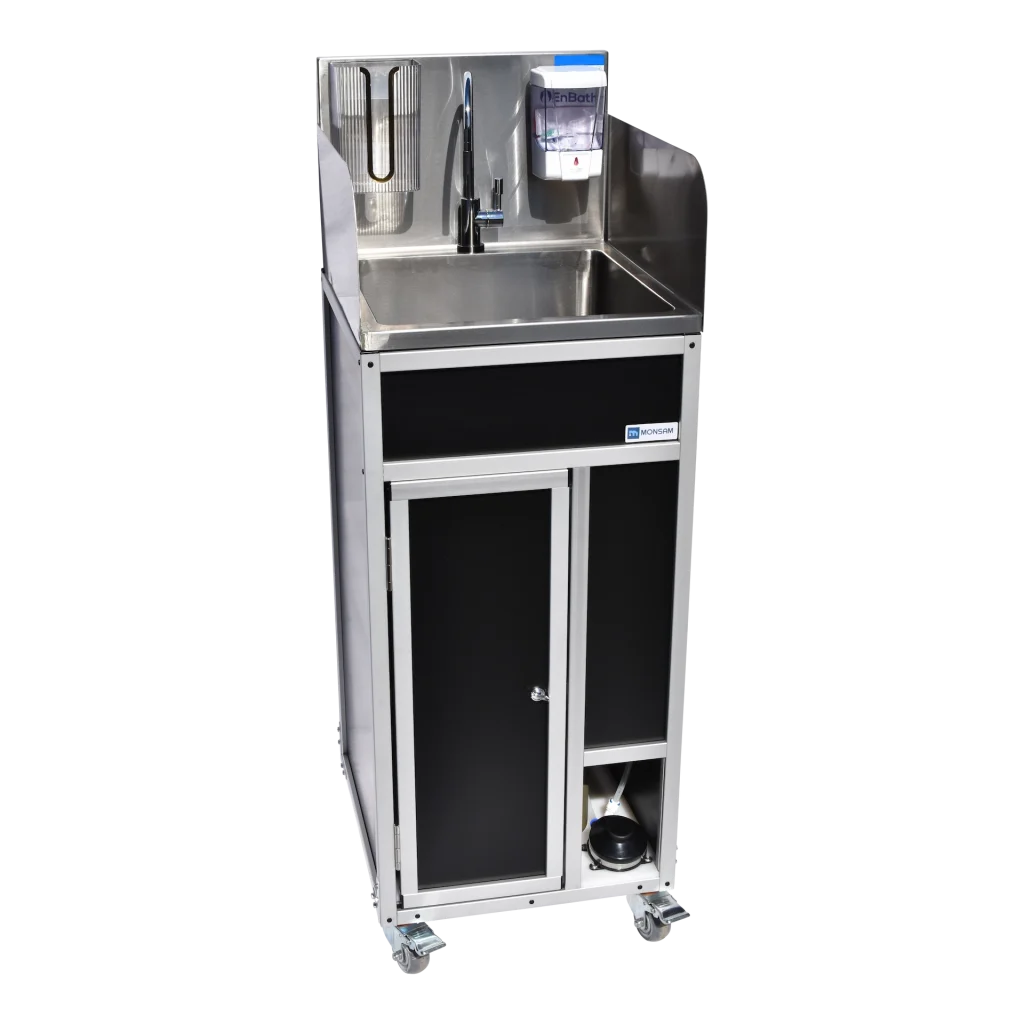
Monsam portable handwashing sinks are built for that exact scenario. They’re self-contained stations that don’t require permanent plumbing installation, so you can place them where handwashing naturally needs to happen. Each unit supports the full process with clean running water, a basin that’s comfortable to scrub in, fresh water storage, waste water collection, and space for soap and paper towels.
You can also choose the setup that fits your operation. Monsam offers different configurations, from dedicated handwashing units to two, three, and four-compartment sinks. That makes it easier to support common workflows like the three-step method used for warewashing, with separate basins for washing, rinsing, and sanitizing.
When the setup is fully stocked and easy to access, handwashing stops feeling like an extra hassle and starts feeling like part of the routine.
Ready to add reliable handwashing to your setup? Browse Monsam portable handwashing sinks and choose the model that fits your space and service needs. And keep in mind that we can also create something custom. Just reach out!
FAQ: Correct Order and Best Practices for Handwashing in Kitchens
Q: Does the type of soap change the correct handwashing order?
No. The order stays the same: wet, soap, scrub, rinse, dry. What matters most is using enough soap to get a good lather and scrubbing every surface for at least 20 seconds. In commercial kitchens, plain soap and running water are exactly what you need, because good technique and consistency are what actually remove germs.
Q: Is it okay to skip drying if I am in a hurry?
No. Drying is a critical part of the process because germs spread more easily from wet hands than from dry ones. Leaving the sink with damp hands can undo the effort you just made. In foodservice, always dry completely using single-use paper towels and do not use shared cloth towels in the kitchen. Those extra seconds make a real difference in keeping food and surfaces safe.
Q: Should we use hand sanitizer instead of washing hands in the kitchen?
No. In a kitchen, handwashing always comes first. Hand sanitizer can be a short-term backup when hands look clean, and you cannot get to a sink right away, but it should never replace required handwashing in foodservice (the FDA Food Code allows antiseptics only after proper handwashing). After using the restroom, handling raw foods, touching trash or dirty dishes, or any time hands are visibly dirty or greasy, soap and running water are the right call because they remove food residue and grime that sanitizer cannot.
Q: How can I teach new staff the correct handwashing steps?
The best way is to make it visible and part of the routine. Post a simple step-by-step sign near every handwashing sink, ideally at eye level. During training, walk new staff through the process and have them practice while you do it with them. Encourage counting to 20 or humming a short tune to time the scrub step. Repetition and reminders during busy shifts help the habit stick faster than lectures.
Q: What if water pressure is low or the plumbing isn’t reliable?
Stick to the same order of steps and focus on rinsing thoroughly. But if plumbing is inconsistent, you need a setup that still provides steady running water so staff can wash their hands the right way throughout service. A self-contained portable handwashing sink with fresh water storage, waste water collection, and a pump system solves that problem in many kitchens, food trucks, and catering setups. Monsam portable handwashing sinks are designed for this kind of use, so you can keep handwashing consistent even when the building plumbing cannot.
Q: How often should portable handwashing sinks be serviced?
In a busy kitchen, check the station daily and more often if usage is high. Refill fresh water before it runs low, empty waste water before it gets close to full, and restock soap and paper towels before each shift. Clean and sanitize the basin, faucet, tanks, and nearby touch points as part of your regular kitchen cleaning routine, following the manufacturer’s guidance. When the station stays clean, stocked, and ready, people are much more likely to use it consistently.