


Picture this: You’re preparing for the busiest service of the week when a health inspector walks through your door. Their clipboard is ready, and they’re scanning your operation for violations.
Health department compliance is a top priority for any foodservice operator. Some of the most frequently cited violations during restaurant or foodservice inspections include inaccessible handwashing stations, inadequate water temperature, or employees washing hands in the wrong sinks. These infractions can result in failed inspections, fines, and even temporary closures. Whether you oversee a large event venue, manage a restaurant, or run a catering business, having proper handwashing and sanitation infrastructure is a regulatory requirement and critical for public health.
Taking this a notch further, what happens when you’re operating in temporary spaces, outdoor venues, or mobile facilities where traditional plumbing simply isn’t feasible? Or when you’re expanding your operation, but don’t have months and tens of thousands of dollars to invest in permanent plumbing installations? Unfortunately, the plumbing needed to stay compliant is often expensive, time-consuming, and inflexible.
Portable sinks serve as a practical, compliant, and cost-effective solution to meet health department sink requirements without the stress of installing plumbing lines. They provide the same level of hygiene and safety as traditional plumbing without the high costs, extensive construction, or long downtime that comes with permanent plumbing installations.
But what do regulators actually require? Let’s find out…

Understanding Health Department Sink Requirements
Most U.S. health departments base their regulations on the FDA Food Code, which establishes comprehensive standards for commercial food establishments.
Commercial food facilities typically need multiple types of sinks:
- Handwashing Sinks: Required in or immediately adjacent to food preparation and service areas, and warewashing areas to allow convenient access for employees. These are your most critical compliance points.
- Food Prep Sinks: Dedicated exclusively to washing produce and preparing ingredients. Not for handwashing.
- Warewashing Sinks (3-Compartment with drainboards): Often required to properly wash, rinse, and sanitize utensils and equipment.
- Mop/Service Sinks: To dispose of mop water and other janitorial waste.
Did you enjoy this post? You’ll probably like this one too: Why Monsam’s New Portable Sink and Sanitizing Station Is the Ultimate Tool for Fighting COVID-19
Critical Handwashing Sink Requirements
The FDA Food Code sections 5-203.11, 5-204.11, and 5-205.11 establish specific requirements for handwashing sinks, including their numbers, capacities, location, and operation.
Here’s what you need to know:
- Location and Accessibility: At least one handwashing sink must be located inside or at the entrance to food prep areas, positioned to allow convenient use by employees working in food preparation, dispensing, and warewashing zones. The sink cannot be blocked by equipment or supplies.
- Water Temperature: The 2022 FDA Food Code specifies that handwashing sinks must provide water at a minimum temperature of 85°F, aligning with Uniform Plumbing Code standards.
- Required Supplies: Hand soap and drying must be available at every handwashing sink.
- Signage: Posted reminders encouraging proper handwashing must be visible near sinks.
- Drain Requirements and NSF Standards: Sinks must have proper drainage systems, and equipment meeting NSF (National Sanitation Foundation) certification standards demonstrates compliance with rigorous safety and sanitation requirements.
State and Local Variations
While most jurisdictions adopt the FDA Food Code as their foundation, local regulations may include additional specifications. For example, Los Angeles County requires mobile food facilities using handwashing sinks only to maintain water temperatures between 100°F and 108°F. Always verify your specific local requirements with your health department in advance.
When Fixed Plumbing Isn’t Feasible
Traditional plumbing solutions work beautifully when you have a permanent location, unlimited budget, and months to complete construction. But many operators face scenarios where installing fixed plumbing isn’t just expensive, it’s disruptive and inflexible. Commercial plumbing installation typically costs between $4 and $6 per square foot for new construction, though costs often approach $6 per square foot in commercial spaces. According to industry estimates, plumbing installations can cost $14 to $15 per square foot, with individual fixture installations ranging from $3,500 to $10,000 per fixture, not to mention the permits, inspections, and lost revenue during installation.
For many operators, including caterers, stadium vendors, seasonal businesses, or mobile foodservice facilities that need flexibility, these barriers can be insurmountable. This is especially the case for businesses that operate outdoor events, experiential pop-ups, food trucks, or leased spaces that must meet health department regulations but typically lack access to permanent utilities. Learn more about Why Portable Sinks Are a Must-Have for Food Trucks and Catering Services here.
Portable Sinks for Compliance and Flexibility
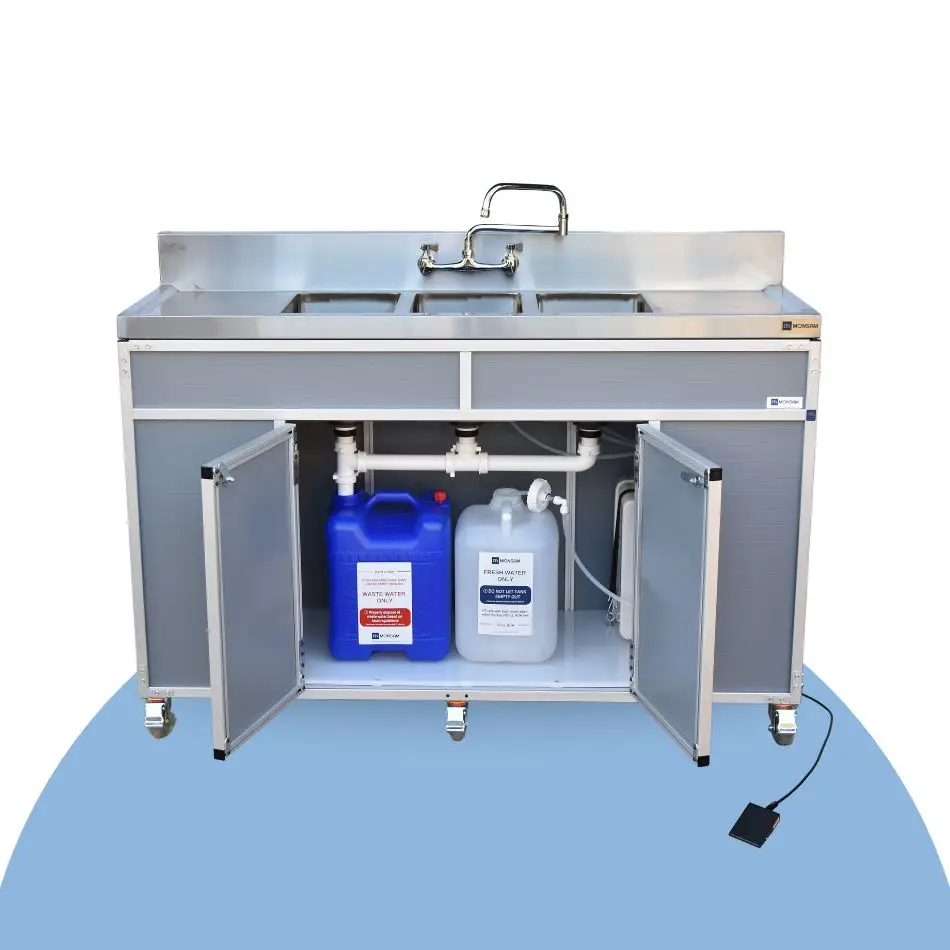
A portable sink is a mobile, fully self-contained unit that delivers hot and cold running water without fixed plumbing.
Each unit typically includes:
- Fresh Water Tank: Removable tank to house clean water for handwashing
- Waste Water Tank: Removable gray water tank to safely capture used water
- Hot Water Systems: Integrated water heater to provide properly tempered water
- Hands-Free Options: Foot pedals or sensor-activated faucets to prevent re-contamination
- Mobile Design: Locking casters to easily move and secure the unit
Choosing the Right Portable Sink
Quality, compliant commercial portable sinks are specifically designed to satisfy health code mandates. But not all portable sinks meet health department standards.
When selecting equipment for your operation, consider these critical factors:
- NSF Certification: NSF certification guarantees that portable sinks meet rigorous public health and safety standards, with durable construction using food-safe, corrosion-resistant materials, hygienic designs that prevent bacterial growth, and features that enable thorough cleaning and sanitization.
- Water Capacity: Portable sinks approved for food service must provide at least five gallons of potable water through a spigot or faucet that can remain open (hands-free operation).
- Hot Water Availability: Verify the unit can maintain required water temperatures (typically 85°F minimum, though requirements vary by jurisdiction) through built-in heating elements.
- Proper Waste Disposal: Integrated wastewater tanks that are larger than the fresh tank to safely contain used water until proper disposal, preventing contamination and environmental violations.
- Placement Flexibility: Because they’re mobile, portable sinks can be positioned exactly where health codes require them, like in prep areas, near cooking stations, at serving lines, or wherever employees need convenient access.
- Build Quality: Stainless-steel basins and commercial-grade construction with durable materials that are lightweight for portability, plus corrosion and rot-resistant to withstand the demands of professional food service.
- Number of basins and drainboards: Having the required number of basins that meet specific needs, like a 3-compartment unit specifically for washing, sanitizing, and rinsing.
- ADA Compliance: If applicable to your operation, ensure sinks meet Americans with Disabilities Act accessibility requirements.
- Warranty Coverage: Look for manufacturers offering a product warranty that demonstrates confidence in their products and customer support.
Key Advantages of Monsam Portable Sinks
In addition to meeting the factors mentioned above, Monsam portable sinks offer the following advantages:
- No Plumbing Installation Required: Monsam portable sinks need only electrical or battery power for heating (and often no power for cold-water models). This means no permits, no construction crews, no demolished walls.
- Immediate Deployment: Our units don’t require any assembly; they work out of the box. Fill the water tank, plug it in (if heated), turn it on, and you’re compliant within minutes, not months.
- Complete Mobility: Heavy-duty locking casters to help you move the unit between different zones, transport it to various event locations, or reposition it as your operation evolves.
- Easy Maintenance: Self-contained systems that are easy to clean, sanitize, and maintain. Also, their mobility helps you clean the areas around them more easily.
- Cost-Effective: While quality units represent an investment, they’re dramatically less expensive than permanent plumbing installation and modification.
- Customization: From the placement of the basins (if any at all) and cabinet resizing to adding shelves and accessories, any unit can be tailored to your operational needs or space.
- Reliable Pre- and Post-Sale Support: Access to knowledgeable support staff to help you choose the right unit(s) and ensure the long-term reliability of your unit(s).
Our high-quality portable sinks are innovative, affordable solutions that help organizations address multiple needs, including handwashing during normal operations, emergency backup when fixed plumbing fails, temporary access to running water during renovations, and reliable hygiene of off-site events. This versatility maximizes your investment.
Compliance Made Convenient
Health code compliance doesn’t have to mean massive plumbing bills, construction disruptions, or operational limitations. Portable sinks have evolved from temporary compromises into sophisticated, NSF-certified solutions that satisfy even the strictest health department requirements.
Whether you’re a hospitality manager adding flexible food service capabilities, a restaurant expanding into pop-up events, or a festival organizer building seasonal operations, portable sinks provide the compliance you need with the flexibility your operation demands.
The math is compelling: for a fraction of the cost of permanent plumbing installation, you can deploy compliant handwashing facilities wherever and whenever you need them. You’ll pass inspections, protect public health, and maintain the operational agility that modern food service requires.
Ready to ensure compliance without the commitment of fixed plumbing? If you’re upgrading your cafeteria, planning event operations, or expanding into new service areas, explore Monsam portable hot water sink solutions that keep you compliant and ready to serve anywhere. Your health inspector and your bottom line will thank you.
Contact us to learn more and build your perfect unit. sales@portablesink.com | 800-513-8562


