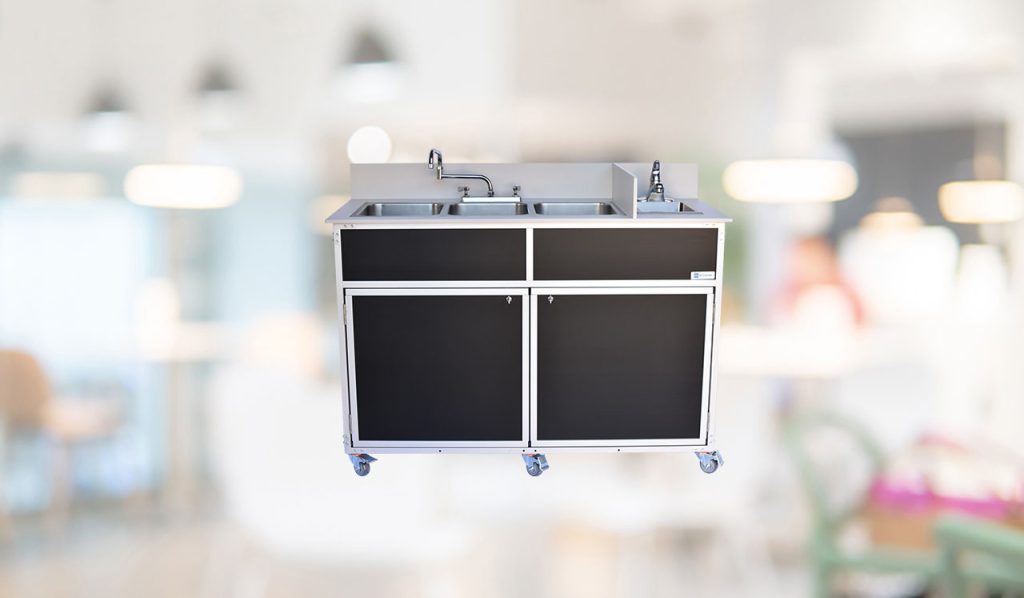
Childcare facilities require immediate and direct accessibility to hot and cold running water. While the specific guidelines vary by state, one thing is universal: Many facilities were built when requirements were not as strict, or were not originally designed with the number of sinks required. As a result, many facilities face costly retrofits to comply with modern health and safety requirements.
California Children’s Academy was one such organization facing the daily logistical challenges of meeting strict hygiene standards. With 15 campuses across the San Fernando Valley and Los Angeles, the cost of retrofitting the plumbing in each classroom and yard presented a significant challenge.
Read more about how partnering with Monsam helped California Children’s Academy comply with the help of self-contained plumbing solutions.
Compliance Affects More than Health
For state-funded child care providers, the importance of compliance goes beyond meeting operational standards. Failure to meet hygiene and classroom configuration rules can jeopardize funding streams and licensing status. Ensuring that sinks are accessible in infant and toddler rooms protects program eligibility and revenue, in addition to being a best sanitary practice.
- In California, Title 22 requires that infant classrooms with changing tables have a sink within arm’s reach. Similar regulations are enforced by health departments across the United States.
- In Texas, preschools are required to provide at least one sink for every 17 children aged 18 months or older and to have it available in diaper-changing areas.
- In New York, all daycare centers must have two sinks in rooms serving infants.
- In Illinois, a handwashing sink must be in the same room if caring for children wearing diapers.
The specific guidelines vary, but all require immediate and direct accessibility to hot and cold running water. While the guidelines are designed to maintain a healthy educational setting, they pose a challenge in buildings without permanent plumbing at each required location.
Meeting Strict Compliance with Portable Sinks
For California Children’s Academy Facility and Compliance Manager, Karen Pinedo, access to hand-washing is a regulatory and instructional priority.
Hand-washing is embedded into the academy’s curriculum, not treated as an incidental routine. Children wash their hands after morning drop-off, after outdoor play, and before and after meals. Administrators track compliance, and classrooms are evaluated using the Environment Rating Scales for infants, toddlers, and preschoolers.
“If we’re going to implement policies for washing your hands, we need to have a resource, right?” Pinedo said.
Rather than undertake expensive plumbing renovations across facilities, the academy adopted portable sinks from Monsam to meet state hand-washing requirements and support infant classroom layouts. The strategy reflects a broader reality in publicly funded early childhood education, where compliance mandates are fixed, but building infrastructure and capital budgets are not.
“Some of our yards don’t have outdoor sinks or outdoor plumbing, so this really helps out with that. It would be nice if our classrooms all had indoor sinks, but they don’t,” said Pinedo.

Avoiding Costly Plumbing Retrofits with Monsam
The California Children’s Academy first purchased Monsam hot water portable sinks in 2008 for five infant campuses, using them both indoors and outdoors. Since then, the program has expanded its use across additional locations.
“From a facilities perspective, it’s easier to put in a portable, self-contained sink than to contract a plumber and go through permitting,” Pinedo said.
While the cost of permanent plumbing installation can vary, depending on contractor labor, permitting, and site modifications, it’s often a costly investment and can be disruptive to normal operations. Portable units allow classrooms to meet compliance requirements without structural renovation. In classrooms requiring access to running water, portable units represent thousands of dollars in avoided capital expense per installation.
How Flexible Handwashing Stations Impact Health
Child height sinks and other solutions from Monsam allow organizations like California Children’s Academy to comply with state requirements without the cost of retrofitting buildings. But easier access to handwashing stations has broader benefits for children and the adults who care for them.
Studies show that environmental factors such as the availability of hand-washing supplies and fixtures are associated with greater hygiene compliance among caregivers in daycare settings, highlighting how infrastructure supports behavior.
“The kids have access to wash their hands. We’re teaching them a skill that they’re going to use when they go home,” Pinedo said. “And it does help with colds, runny noses, and other easily transmissible illnesses.”
Pinedo said the self-contained sinks are especially valuable for babies and toddlers who do not have the autonomy to walk independently to centralized restrooms. Pinedo also observed practical health benefits beyond compliance and cost-savings. It’s just one way that educators can keep classrooms clean and prevent the spread of illness.
Bridging Regulation and Real-World Facilities
Facility decisions are rarely cosmetic in publicly-funded early education. Infrastructure must support compliance, inspection performance, and reimbursement eligibility. At the California Children’s Academy, Monsam classroom portable sinks provide a practical bridge between regulatory mandates and aging building stock.
Want to learn how Monsam can help your classroom meet state requirements and prevent the spread of germs? Contact our team to learn about our options for classroom portable sinks. We have a variety of child height sinks and full-sized sinks to meet any classroom setup.