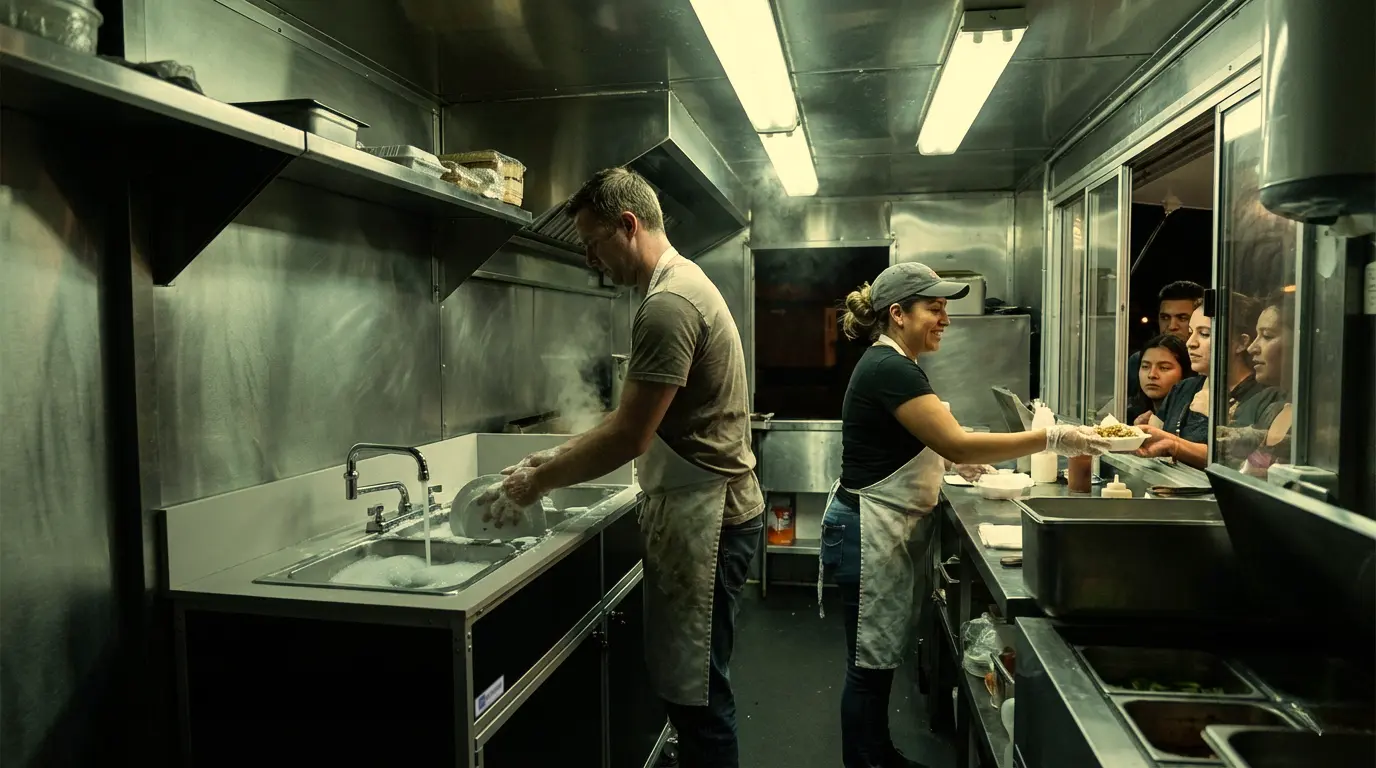
On a food truck, your sink setup can make or break your whole food service operation. When space is tight, you don’t have room for a setup that’s awkward to use, hard to keep clean, or constantly in the way. And the tricky part is that most trucks don’t just need one sink. They need the right combination, installed the right way, based on what you serve and what your local health department requires.
In this guide, we’ll cover the different sink types most common in food trucks, including handwashing sinks and 3-compartment sinks for the wash, rinse, sanitize process, plus when a separate prep sink may be required. We’ll also get into what to look for when choosing a sink (materials, certification, sizing) and how to plan a setup that works day to day, from water supply and drainage to placement and flow.
Types of Food Truck Sinks Required
Most food trucks need more than one sink because each sink has a specific job. Your local health department isn’t just checking that you have sinks; they’re checking that each sink has a clear purpose, that it’s installed correctly, and that your setup supports safe habits when service is moving fast.
What you need to have depends on where you operate and what you do on the truck. A simple menu with mostly packaged items may be treated differently from a truck that preps raw ingredients and cooks everything to order. But in many cases, inspectors expect at least two dedicated functions for food truck sinks:
- A three-compartment sink for warewashing (washing, rinsing, and sanitizing dishes and utensils).
- And a separate handwashing sink for staff.
That separation matters for cross-contamination. In a CDC analysis of norovirus outbreaks where contamination factors were reported, an infected food worker was implicated in 70% of outbreaks, and 54% involved food workers touching ready-to-eat foods with their bare hands. From there, you may need additional sinks depending on your prep work, your ingredients, and any local rules that apply to mobile units.
The safest approach is to plan your sink layout around your workflow and local requirements, not just the bare minimum. When the setup matches how you actually operate on the truck, it’s easier to keep things clean, fast, and consistent during peak service.
Three-Compartment Sinks: The Heart of Food Truck Sanitation

A three-compartment sink is the core of most food truck sanitation systems because it supports a consistent wash, rinse, and sanitize routine for dishes, utensils, and small equipment. It checks two big boxes at once: inspectors can quickly recognize a proven process, and operators get a setup that keeps cleaning organized even when the truck’s busy.
In the first compartment, you wash items with hot water and a dishwashing detergent to remove grease, food residue, and visible debris. Many health departments expect the wash water to be hot enough to clean effectively, and some set minimum temperatures, so it’s worth confirming your local requirements.
The second compartment is for rinsing, which matters more than people think. If detergent is left on utensils, it can interfere with how well your sanitizer works.
The third compartment is for sanitizing, either with an approved chemical sanitizer or hot water sanitizing, depending on what your setup can realistically support. If you’re using a chemical sanitizer, follow the label directions and keep the right test strips on hand so you can confirm the concentration is actually in range.
Sizing matters too. Inspectors commonly expect your largest pan or utensil to fit in the basins so it can be fully washed, rinsed, and sanitized. If your biggest piece of equipment can’t be submerged, you can end up with a setup that looks fine on paper but breaks down in real service.
Two-Basin Sinks (A Practical Option in Tight Layouts)
Two-basin sinks are popular on food trucks because they can solve real space and workflow problems. A two-basin sink can give you a dedicated spot for quick rinse and wash tasks, keep mess contained, and help you separate “dirty” and “clean” steps better than a single basin setup. They’re also a common choice when you’re trying to fit a functional sink system into a compact counter run without sacrificing prep space.
That said, a two-basin sink doesn’t automatically replace a 3-compartment sink. Many jurisdictions still require three compartments for a clear wash, rinse, and sanitize process for warewashing. The best approach is to treat a two-basin sink as a space-saving, workflow-friendly tool, then confirm with your local health department whether it can be used for your menu and your cleaning requirements.
Handwashing Sinks: Critical for Staff Hygiene
Handwashing is one of the simplest ways to prevent cross-contamination and avoid easy violations, and on a food truck, it’s even more important because everything’s close together. A dedicated handwashing sink helps you avoid cross-contamination by making it easy for staff to wash hands at the right times, without using prep or dish sinks.
Expectations for handwashing stations are usually clear. The sink should be dedicated to handwashing, supplied with soap and single-use paper towels (or an approved drying method), and set up so staff can use it during service without moving things out of the way. Inspectors also tend to check that the sink is actually usable, meaning it has the water supply it needs, it drains properly, and it stays accessible.
Placement makes a real difference. If the handwashing sink is tucked behind equipment or blocked by storage, people won’t use it as often as they should, even with the best intentions. A well-placed handwashing sink supports good habits because it’s convenient, obvious, and part of the natural flow of service.
The most common problems are also the easiest to prevent: using the hand sink for other tasks, storing items in it, or running out of soap or towels mid-service. If your handwashing sink stays dedicated, stocked, and easy to reach, you’re setting yourself up for a cleaner operation and a much easier inspection.
Did you enjoy this post? You’ll probably like this one too: Why Portable Sinks Are a Must-Have for Food Trucks and Catering Services
Prep Sinks: When a Separate Prep Sink May Be Needed
A prep sink is used for food prep tasks like washing produce, rinsing ingredients, or thawing foods, and it’s separate from both the handwashing sink and the three-compartment sink. Some food trucks won’t need one, especially if you’re only using pre-washed or pre-prepped ingredients. But if you’re washing produce, prepping raw ingredients, or doing on-truck food prep that requires rinsing, your local health department may require a dedicated prep sink so those tasks don’t happen in the handwashing sink or in your warewashing basins. The safest move is to confirm expectations with your local health department, since requirements can vary based on your menu and how you handle ingredients during service.
Health Code Compliance and Regulations
Health code compliance isn’t something you can treat as an afterthought if you run a food stand or operate a food truck. Your sink setup is one of the clearest ways the health department confirms you can operate safely in a small space, and requirements can vary depending on where you’re licensed and what you’re serving.
Most regulations aim at the same basics:
- Prevent cross-contamination
- Support proper cleaning and sanitizing
- Keep handwashing accessible.
Where things change is in the details. Many jurisdictions use the FDA Food Code as a baseline, then add local requirements or enforce certain interpretations more strictly.
Start With Your Local Health Department
Before you buy equipment or lock in your layout, check directly with your local health department so you’re designing for what they actually inspect. That quick step can save you from expensive rework later, especially if your jurisdiction has specific rules around sink sizing, layout, or required sink types.
Equipment Standards and Certifications
Some health departments expect commercial-grade equipment and may require certain certifications, like NSF-certified sinks or components. Others focus more on whether the system functions correctly and supports safe sanitation habits during service. Either way, it helps to choose equipment that’s built for commercial use and to keep product documentation on hand.
Water, Temperature, and Sanitizing Expectations
Inspectors want to see that your sinks can deliver hot water as required, that you have reliable running water with enough flow for handwashing and cleaning, and that your truck has adequate fresh water and wastewater capacity to operate without cutting corners.
Temperature is also a common checkpoint. Many jurisdictions set minimum water temperature expectations for handwashing and for the wash step in a three-compartment sink, and they may have specific expectations for how sanitizing is done, whether that’s chemical sanitizers or hot water methods. Instead of relying on one universal number, make sure your system can consistently meet the requirements your local rules call for during real service.
Layout and Documentation
Placement matters too. Some jurisdictions have spacing or placement expectations designed to reduce cross-contamination and keep handwashing accessible without disrupting food prep. Finally, don’t overlook documentation. Inspectors may ask for proof of certifications, equipment specs, or installation details, so keeping that information organized can make inspections smoother and reduce back and forth.
These are some of the most common compliance themes, but they aren’t the whole picture, which is why it’s important to confirm your local requirements. If you plan around these priorities early, you’ll be in a much better position to build a sink system that supports compliance and avoids surprises during inspection.
Materials and Construction Standards
On a food truck, sinks take a beating. They’re exposed to constant moisture, frequent sanitizing, temperature swings, and the vibration that comes with driving. So when you’re choosing a sink system, the goal isn’t just “does it fit,” it’s “will it hold up and stay easy to clean month after month?”
Stainless Basins Are Still the Workhorse
For most mobile kitchens, stainless steel sink basins are the go-to because they’re durable, corrosion-resistant, and simple to sanitize. They hold up well to daily use and routine cleaning, which is exactly what you need in a compact workspace where sanitation has to be consistent.
The Cabinet and Countertop Matter Too
Beyond the sink basin, not every part of the unit has to be stainless to hold up on a food truck. Many portable sink systems combine stainless basins with other rugged materials, like high-quality plastic panels or molded components designed to resist moisture and wear. The key is choosing surfaces that are easy to wipe down, resistant to corrosion, and appropriate for food service environments.
Choose a Sanitation-Friendly Design That Holds Up on the Road
Whatever sink system you choose, pay attention to the build details that support sanitation and long-term reliability. Smooth surfaces, sealed joints, and rounded corners make cleanup faster because there are fewer cracks and tight angles where grime can build up. Sturdy construction also matters in a mobile environment, since vibration and movement can expose weak points over time. A well-built unit makes cleaning faster, keeps your setup looking professional, and helps you avoid repairs you didn’t plan for.
Sizing and Space Planning
Space planning is one of the hardest parts of building or upgrading a food truck, because every inch has to serve a purpose. Sinks are a big part of that puzzle. They’re not only a compliance requirement, but they also influence how your truck functions when it’s busy. If your sinks are too large, poorly placed, or hard to access, it can throw off the entire workflow.
Plan Sinks Before You Finalize the Rest of Your Layout
It’s tempting to start with grills, fryers, and refrigeration, but sinks deserve a place in the plan early on. Your sink setup affects where water lines run, where tanks sit, and how staff move through the kitchen. Locking in major equipment first can leave you trying to force a sink system into whatever space is left, which is usually where problems start.
Fit Matters, but So Does Usability
Compact sink options can be a great fit for food trucks, but sizing isn’t only about “will it fit in this corner.” You also need room to use it the way it’s meant to be used. That means thinking about clearance in front of the sink, space to set down clean and dirty items, and whether staff can access the handwashing sink quickly without squeezing past prep or cooking zones.
Build Around a Clean Workflow
Your sink system has to coexist with cooking equipment, cold storage, prep surfaces, and storage, all without creating cross traffic or bottlenecks. A good layout keeps the handwashing sink easier to reach and warewashing from interfering with prep. It also avoids forcing someone to carry dirty items through the middle of active food prep during peak service.
Don’t Overlook Water and Weight
Sinks bring more than basins. Fresh water tanks, wastewater tanks, water heaters, and pumps all take up space and add weight. Planning for where those components go, and how the weight is distributed when tanks are full, helps you avoid surprises that affect performance and handling.
When Custom Options Are Worth It
Some trucks have odd dimensions or unusually tight layouts, and standard sizes just don’t work. In those cases, a custom or semi-custom configuration can be the difference between a setup that barely works and one that’s actually compliant and efficient. It can cost more, but it may save you from having to redo the system later.
Installation Requirements and Considerations
On a food truck for a mobile catering operation, a sink setup is never just the basins. To work the way it’s supposed to, it has to connect to a complete system that can deliver reliable hot water with enough flow, drain reliably, and handle the volume of service you actually run. This is where details start to matter, not because the sinks are wrong, but because the water heater, tanks, plumbing, and drainage have to work together as one system.
What You’ll Need Beyond the Sink
Fresh water storage, wastewater storage, a water heater, a pump to deliver consistent water pressure, and plumbing that routes water and drainage safely are all part of a functional food truck sink system. Those components take up space, add weight, and affect where your sinks can realistically go. That’s why it’s worth planning the full system early, instead of treating it like a final detail once everything else is already locked in.
Build for the Realities of the Road
Food trucks operate in conditions that fixed kitchens don’t. Road vibration, movement, and frequent setup and breakdown can expose weak points over time. A good installation keeps components secure, uses connections and routing that hold up to daily use, and leaves access for maintenance, shutoffs, and routine servicing. When the system is easy to reach and easy to maintain, it’s much easier to keep everything running and inspection-ready.
Keep Workflow and Cleanliness in Mind
Installation choices can also affect sanitation and speed. You want handwashing to stay easy to use during service, warewashing to have enough room to work, and the surrounding area to be cleanable without fighting awkward gaps or splash zones. A sink system that’s practical in real service helps you stay consistent, which is what inspections are really testing for.
Purchasing Guidelines and Budget Planning
Buying a sink system for a food truck isn’t the place to chase a cheap, low-quality option and hope it works out. If your sink setup fails, leaks, can’t keep up with service, or doesn’t meet local requirements, it can cost you far more in downtime and rework than you saved up front. A smart purchase starts with clarity: what your local health requirements are, what your menu demands, and what your truck can realistically support.
Start With Compliance and Real Workflow
Before you compare models, get clear on what you actually need. Confirm the required sink types with your local health department, then think through your day-to-day operation: what gets washed on the truck, how often, and by whom. How many hands are working in the space? Where the handwashing sink needs to be to stay usable when things get hectic. When you buy based on real workflow, you’re much less likely to end up with a setup that technically meets the rules but feels frustrating to use.
New Versus Used: Know What You’re Trading Off
Used equipment can be tempting, but it comes with tradeoffs. Sinks and portable systems may show wear in places you can’t easily spot, and missing documentation can create inspection headaches depending on your jurisdiction. New systems usually make compliance and support simpler, especially if you need clear specs, current certifications, and consistent performance. If you do go used, focus on condition, cleanability, and whether you can verify what you’re actually buying.
Focus on Build Quality and Support, Not Extras
Prioritize the things that keep you running: durable materials, solid construction, easy-to-clean surfaces, and a design that makes the system practical in a tight space. Then look at the support side. Warranty coverage, replacement parts, and responsive customer service matter more on a food truck than they do in a fixed kitchen, because a failure can stop service for the day.
Budget for the Full System, Not Just the Sink
It’s easy to compare sink basins and forget everything else the system depends on. Water tanks, pumps, water heating, plumbing, and installation can all affect the total cost and the long-term reliability of your setup. Thinking in terms of the full system helps you avoid surprises and choose equipment that fits your truck and your operating plan.
Think Long Term
A sink system that’s easier to use and easier to maintain tends to pay for itself in less downtime, fewer repairs, and smoother inspections. Instead of choosing based only on initial cost, consider how the system will hold up under daily use and how easy it’ll be to keep clean, stocked, and running over time.
Why Choose Monsam Sinks for Your Food Truck
When you’re building out a food truck, your sink system has to be dependable. It needs to support the way you actually work in a tight space, stay easy to clean, and help you meet the requirements your local health department will inspect for. That’s where Monsam sinks come in. Here’s how:
Built for Mobile Foodservice
We design portable, self-contained sink systems specifically for real-world mobile use, including models built for food truck applications. Our units are made to fit compact layouts without sacrificing the features that matter for daily service.

NSF Certified Options and Compliance Ready Specs
We offer NSF-certified models, which can matter in jurisdictions that look for NSF certification or documentation during permitting and inspections. Requirements vary by location, but having certified options and clear product specs can make the approval process much smoother.
Durable Materials Where It Counts
Food trucks are hard on equipment, so we build with durability and cleanability in mind. Many of our portable sink models use stainless steel basins paired with rugged construction built for frequent use, so you can keep your sink area sanitary without constantly worrying about wear and tear.
Configurations That Match Your Operation
Not every food truck needs the exact same setup. That’s why we offer a range of basin configurations, including multi-basin options that support both handwashing and warewashing needs, depending on how your truck is designed and how you operate during service.
Real Support When You Need It
We’ve been building portable sinks since 1998, and we help food truck operators choose the right unit for their space and workflow. If you’re trying to avoid guesswork during a build, our team can walk you through options and help you land on a sink system that fits your requirements.
Need help choosing the right sink system for your food truck? Browse our food truck sink configurations, or reach out, and we’ll help you match the right setup to your menu, layout, and local requirements. If your space is tight or unusual, we can also explore custom options!